
Huntington County Court Calendars Explained
A court calendar lists upcoming settings. Huntington Circuit and Superior pages push public case information to MyCase, and the county posts no separate daily-calendar URL of its own. A public CCS event can show the next date, time, place, and purpose. A missing entry proves nothing about whether a hearing exists.
Administrative Rule 9 lets daily calendars list case number, caption, date, time, and location. Restricted matters may stay off. Confirm any future setting with the assigned court. Do this especially after a continuance or transfer.
Huntington County Court Date Channels
Several routes can confirm a Huntington County setting. MyCase is the public online option. Pull up the case, read the newest setting, and watch for a later continuance, transfer, cancellation, or judge assignment. For in-person help, the Clerk counter and courthouse terminal at 201 N Jefferson Street serve as the main fallback. Phone works too. The Clerk can be reached at (260) 358-4817. Circuit Court is (260) 358-4814, Superior Court (260) 358-4852, and the court administrator (260) 358-4815.
The assigned court knows same-day logistics best. A represented party should also check with counsel. A posted courthouse calendar or docket call can help, though the current court instruction controls. Huntington offers no public email calendar, reminder app, dropbox, vendor feed, or standalone daily-calendar download. There is no general public video-hearing calendar either. When a remote hearing is ordered in a case, only the court's own joining instructions count.
A written calendar request should name the court and date, plus the case number when possible. Indiana APRA can reach county administrative material, subject to applicable law, but court access rules still govern. Confirm fax acceptance before sending anything. For a bulk or compiled calendar request, Administrative Rule 9 applies. Pulling data from MyCase automatically is no substitute and can trigger a CAPTCHA.
Office hours and lunch periods vary across Huntington offices. A last-minute call may go unanswered at the first office tried. Check the official county court pages before making a same-day visit. Written court communication rules still apply. A call can confirm where and when to appear. It cannot act as a motion to continue, proof of service, or permission to skip the setting.
Finding Your Court Date
Start at MyCase with the exact case number. Choose Huntington County, open the matching 35C01 Circuit or 35D01 Superior record, and read the newest setting plus any later order. No number in hand? Search by name, then verify the court, role, type, and filing date.
- Search MyCase by exact number or a carefully checked name.
- Open the case and read the newest setting and later CCS entries.
- Call Circuit at (260) 358-4814, Superior at (260) 358-4852, or the Clerk at (260) 358-4817.
- Confirm at the Clerk counter or courthouse posting at 201 N Jefferson Street.
- Check with counsel when represented, then follow the court's current instructions.
Huntington County Court Date Fields
The official MyCase search interface takes a case number, citation number, cross-reference, party name, business name, or attorney. Filters for court, category, open or closed status, and filing dates narrow the results. Filter too hard, though, and a transferred or converted case can slip out of view.
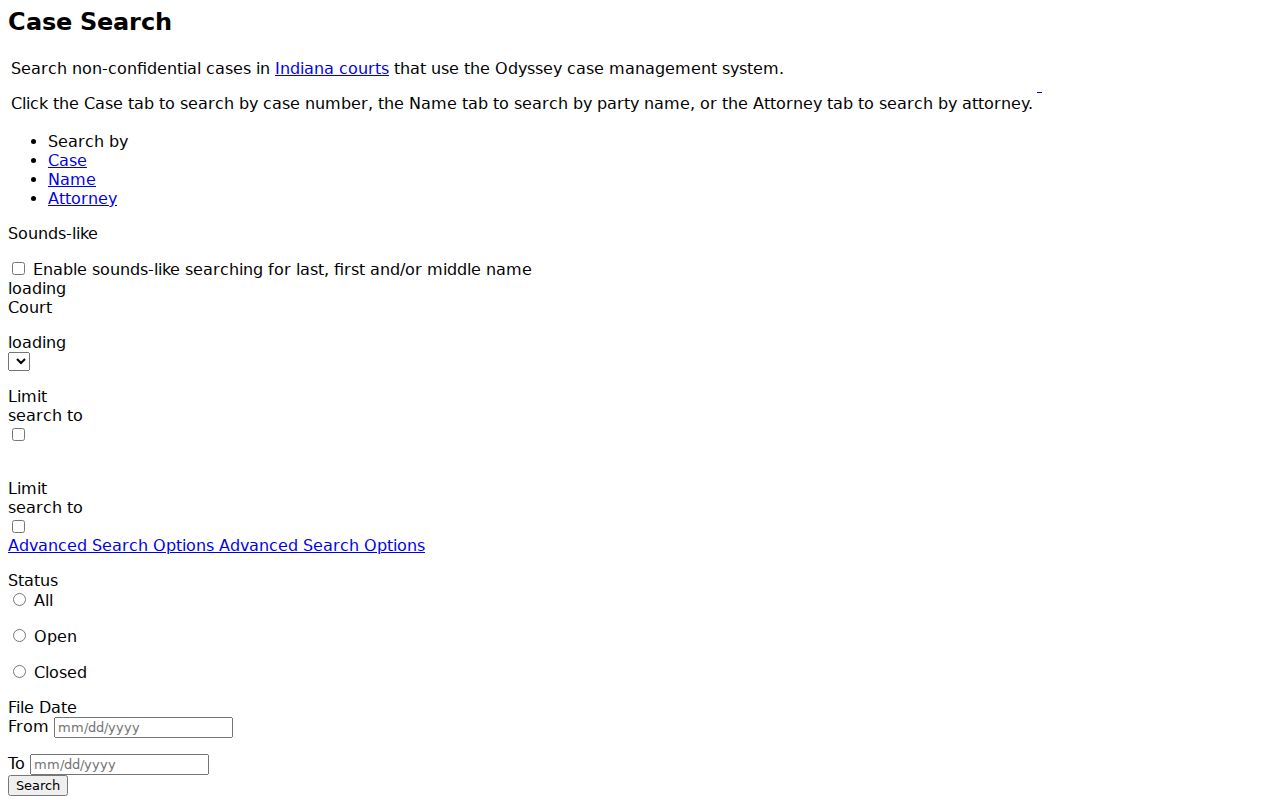
That official statewide search path is the starting point. It is a finding aid only, not the official court record, and no promise that every future date is public online.
How to Read a Court Setting
Read a setting as a bundle of fields. A date with the wrong court or case can mislead. Purpose matters too. An initial appearance, omnibus hearing, pretrial, motion hearing, trial, and review each play different roles. A public calendar never proves that formal notice or service occurred.
| Date | The scheduled calendar day, subject to later order. |
|---|---|
| Time | The listed start or docket-call time. |
| Courtroom | The room or location in the current notice. |
| Judge | The assigned court or presiding judicial officer. |
| Setting Type | The purpose, such as initial, pretrial, hearing, or trial. |
Huntington County Court Calendar Records
A calendar looks forward. A CCS records events as the case system receives them. A notice tells a party about a proceeding, while a listing on the calendar alone proves no service, and a continuance can reach the CCS before another calendar view refreshes.
- Setting
- A scheduled court event.
- Continuance
- A postponement ordered by the court.
- Pretrial
- A case-management event for motions, proof, settlement, and trial preparation.
- Omnibus
- A criminal pretrial stage named in Huntington local rules.
Continuances, Resets, and Cancellations
A continuance postpones a setting. The CCS may list the request, the court's order, and a replacement date. These can appear as separate entries. Filing a request does not mean it was granted. Keep following the existing setting until an order or the court confirms a change.
Online information may lag or omit a restricted event. Search the newest CCS activity, review any written notice, and call the correct office. Court business requires written communication, and self-represented parties meet the same standards as attorneys.
Huntington County Court Date Limits
Huntington Superior's Clerk schedules small claims. Local rules limit a plaintiff to two contested hearings per day, cap proceedings supplemental at twenty daily, and give a trial thirty minutes unless more time is requested beforehand. Those limits can explain a short setting or a later date, but only the court can confirm a specific case. The Indiana court services page adds statewide context.
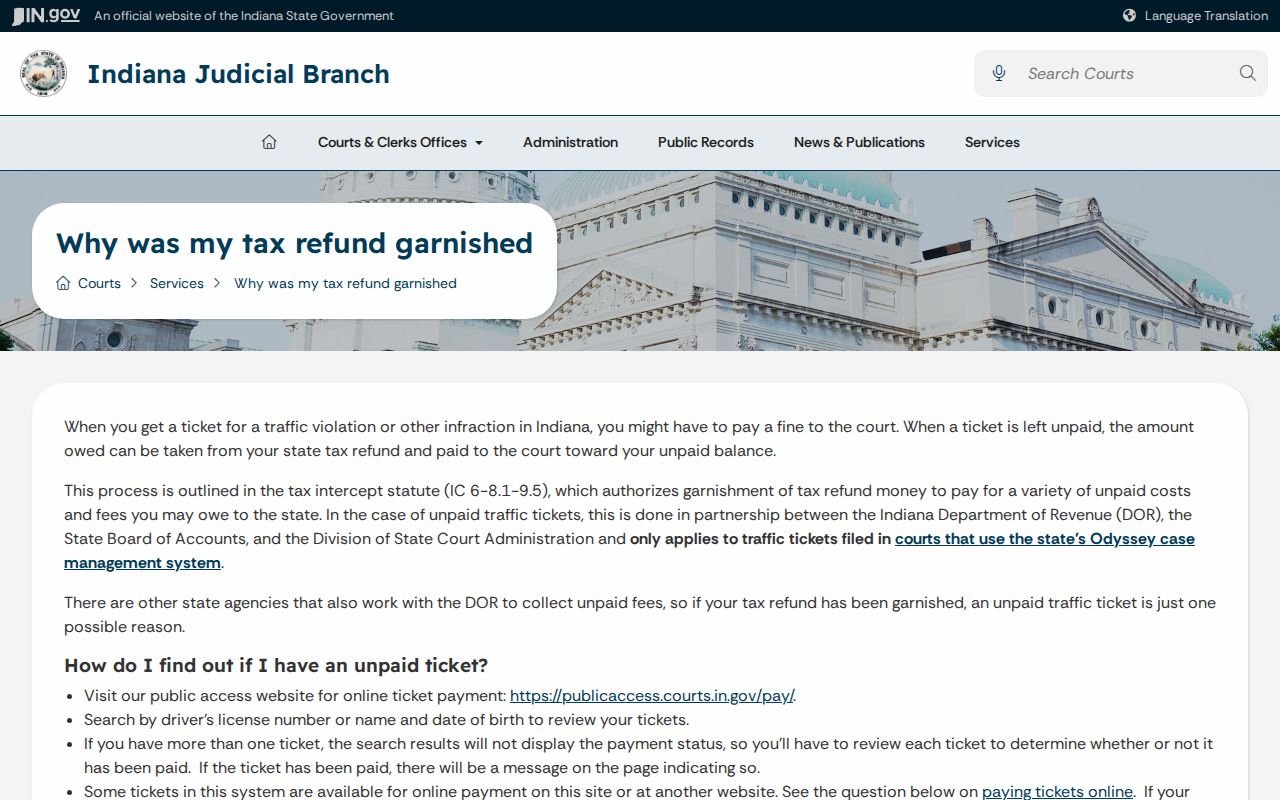
The image helps distinguish a statewide service notice from the actual Huntington hearing calendar.
If You Miss a Court Setting
Call your assigned court and your counsel right away. Ask what the CCS shows now, and whether the court entered a warrant, default, dismissal, new date, or an order. The Clerk can hand you the public entry but cannot undo the consequences or give legal advice. Acting fast still matters.
Missed a Setting? A missed criminal date can bring a failure-to-appear response or warrant, while a civil absence can bring default or dismissal.
Contact the court and your attorney promptly, and ask for the current written instructions.
Legal counsel can explain the safest response before an unplanned courthouse appearance.
Huntington County Calendar Access Rules
Indiana APRA governs public agency records. Court calendars and case files answer to separate court access rules and orders, not to that statute alone.
That statute shows why an administrative request cannot unlock a sealed or excluded court matter. Cite the exact date, court, and calendar when you ask. For restricted records, use the court's Rule 5 or Rule 9 route.
Huntington County Court Date Boundaries
Hearings in the Northern District of Indiana never show up on the Huntington County trial calendar. Federal cases run through PACER, CM/ECF, and the federal clerk. The Northern District website is the official federal starting point.
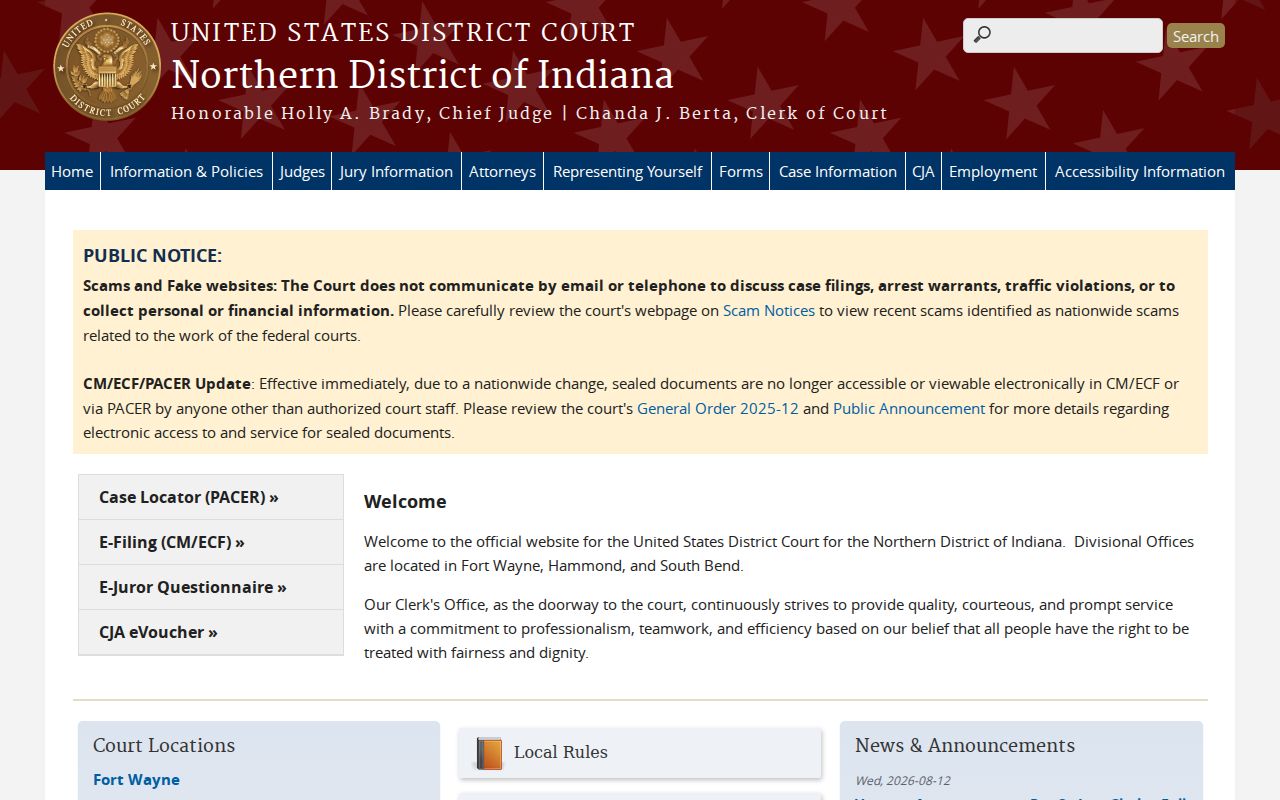
The federal court sits in its own jurisdiction. A call to the county Clerk cannot confirm a federal setting, and a federal notice never changes a Huntington CCS date.
Huntington County Court Date Checks
Before you travel, compare five details. Check the case number, the assigned court, the calendar date, the start time, and the location. Then read each CCS entry posted after the setting. A later continuance or transfer controls. That holds even if an older notice is still in your hand. Ask whether check-in, security screening, or written instructions affect your arrival. Courthouse access guidance is not permission to show up after the listed time. Keep a copy of the current notice and the name of the office you contacted.
In a restricted case, never push for protected facts through a public calendar request. Instead, ask the Clerk or the court what public confirmation it can give. Is the matter federal or appellate? Then switch to that court's system rather than searching the county calendar again. These checks matter most in a few situations. That includes a legacy identifier, a converted CCS entry, or a recent reassignment.