
Searching Huntington County Civil Dockets
Indiana's free public Odyssey search runs through MyCase. Pick Huntington County. Use the exact case number if you have it. Circuit numbers start with 35C01 and Superior numbers with 35D01. No number? Try the Name tab with a last name or business name, then narrow by status, filing date, or category.
Check the caption, party role, civil type, court, and filing date before trusting a result. A CCS event on screen is only an index entry. It is not always a document you can download. Older converted records can be sparse.
- Open MyCase and select Huntington County.
- Search an exact case number or party name.
- Match the court, caption, role, type, and date.
- Read the CCS for service, motions, settings, and judgment.
- Request the official document from the County Clerk when needed.
Huntington County Civil Docket Channels
Start online, but do not stop there. The Huntington County Clerk holds the Circuit and Superior case records. The counter sits in Room 201 at 201 N Jefferson Street in Huntington. At the courthouse, a visitor can use the public terminal. You can also pull a file, or ask for a copy by case number and CCS date. A quick call to (260) 358-4817 saves a wasted trip. The Circuit and Superior offices can confirm hearing settings, but the Clerk remains the route to the court docket itself.
A written request works best when it is specific. Name the court, the case number, the caption, the document or CCS entry, the date range, and whether you want to inspect or copy. The county APRA form covers county administrative records. Court files follow the Indiana Rules on Access to Court Records instead. Fax numbers are published, but the office does not state a general fax policy. The Clerk offers no general email, dropbox, vendor, or bulk feed, so confirm delivery before sending payment or personal details.
Two statewide tools broaden the docket search. MyCase shows the public CCS along with permitted documents. The Indiana Courts Public Portal handles protective-order access and other special services. The Indiana E-Filing System exists for submitting filings through certified providers, not for public case lookup. Filing something does not make every attachment public. For a transcript, contact the court reporter, since the CCS is not one. Old, transferred, restricted, or missing cases send you back to the courthouse file and Clerk verification.
Each channel has a job. MyCase finds cases and shows public events. The terminal fills gaps in online coverage. The Clerk provides certified copies and current financial information. The assigned court gives hearing times, and the reporter handles transcripts. When you know the exact paper, a narrow written request is the fastest path. These tools overlap, but none replaces another.
Inside a Huntington Civil Docket
Indiana calls its docket the Chronological Case Summary, or CCS. One document can list parties, counsel, filings, service, motions, settings, orders, judgment, and disposition. Even so, the CCS is not the full maintained file, and public financial displays may still need Clerk confirmation before you rely on them.
| Case Number | Court, filing period, case type, and sequence. |
|---|---|
| Parties | Plaintiff or petitioner and defendant or respondent roles. |
| Filings | Dated complaint, answer, service, and later-paper events. |
| Motions | A request and its later ruling, if entered. |
| Judgment | The final order, dismissal, default, or other outcome. |
Huntington County Civil Docket Documents
The MyCase document matrix sorts online documents from those you can only see in person, and civil access varies by category. An "order entered" event on the CCS does not guarantee the order itself is online.
The current remote-access rule sets out the official rules that govern what courts can display this way.
When a public filing is missing online, go to the Room 201 counter or the courthouse terminal. Give the case number, the document, its entry date, and the format you want. Confirm mail or fax acceptance before you send anything.
Civil Case Types on the Docket
Type codes sort Huntington County civil cases into access categories and matter types. A Huntington County civil docket may carry collections, torts, plenary matters, evictions, small claims, domestic relations, estates, guardianships, and miscellaneous civil filings. Treat the code as a routing label only. The caption and the CCS entries tell you what the court records actually say.
- CC collection and CT tort.
- PL plenary and MI miscellaneous civil.
- EV eviction and SC small claims.
- DC, DN, and DR domestic relations.
- ES estate and GU guardianship.
Huntington County Civil Docket Claims
Small claims in Huntington County get their settings from the Superior Clerk. Local rules shape that calendar in specific ways. A plaintiff may request only two contested hearings per day. Proceedings supplemental are capped at twenty per day. Trials run thirty minutes unless extra time is asked for ahead of the hearing. These caps affect scheduling, never the merits of a claim.
Docket settings can shift, so always confirm the newest notice before a court date. Service, the hearing itself, a judgment, and collection efforts are separate things. Each shows up as its own CCS entry on the docket.
Civil Docket Settings and Hearings
Open a civil CCS and you might see a pretrial conference. You might also see a motion hearing, a settlement event, a trial, or a judgment hearing. Pretrial work in Huntington County can involve motions, stipulations, exhibits, unusual issues, settlement talks, and alternative dispute resolution. Discovery is expected to be done before the pretrial date arrives.
When an entry shows a continuance, the event has simply moved. Track the latest docket entry. Then confirm the new date through the Huntington County court dates, the Clerk, or the assigned court. A phone call helps with logistics. It does not substitute for a required filing or an appearance in court.
Two Huntington County Civil Docket Courts
Civil filings in Huntington County can go to either Circuit or Superior. Local rules let the filing party choose. Domestic relations cases fall under that choice too. Circuit carries the rest of its usual load: probate, estates, guardianship, juvenile matters, and mental-health cases. Superior takes small claims and protective orders. A transfer can shift the working court mid-case. So trust the case identifier and the newest CCS entry over anything else.
Before assuming you know which court holds a file, run a Huntington County docket search without the court filter. The Clerk, at (260) 358-4817, keeps both courts' records. To confirm a hearing setting, call Circuit at (260) 358-4814 or Superior at (260) 358-4852.
Civil Docket Access Rules
Indiana treats court records as open by default, yet the online view is narrower. Juvenile, adoption, mental-health, sealed, and some family-sensitive filings may be left out or redacted, and protective orders sit behind a separate Public Portal path. So a plain name search never tells the whole story on protected matters.
Key Rules:
Access Rule 5 defines exclusions and redaction.
Access Rule 9 provides an extraordinary-access procedure.
Indiana APRA covers county administrative records but does not override court restrictions.
Missing Huntington County Civil Docket Filings
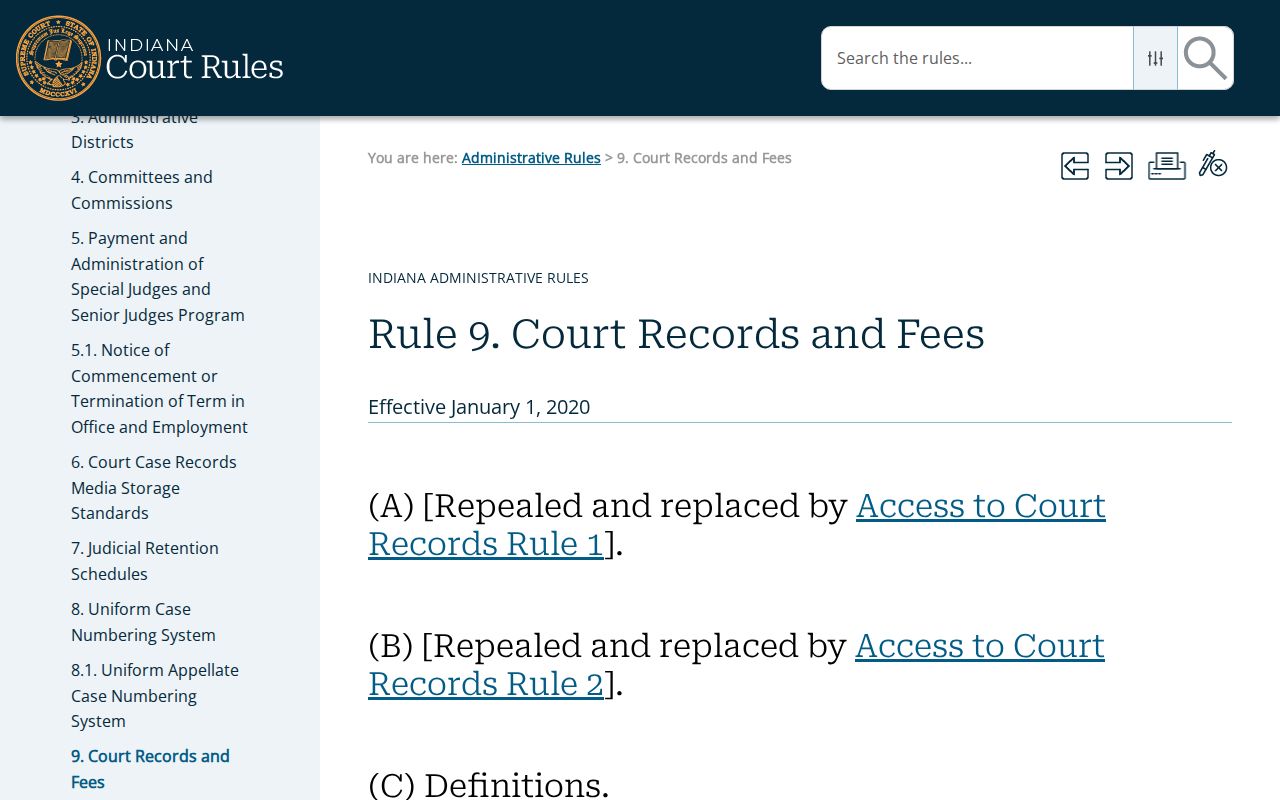
Sometimes an order shows up in the Huntington County civil docket. The complaint or an attachment does not. Start with the case type and document matrix, then inspect the court file in person. You can also ask the Clerk for the exact paper; a public terminal is available at the office. There is no general court-record email, dropbox, vendor feed, or bulk shortcut. For compiled requests, Administrative Rule 9 governs.
Huntington County Civil Docket Boundaries
Federal civil cases never land in the Huntington County CCS. The Northern District filing index runs on the federal court's own system, which lists each case filed there.
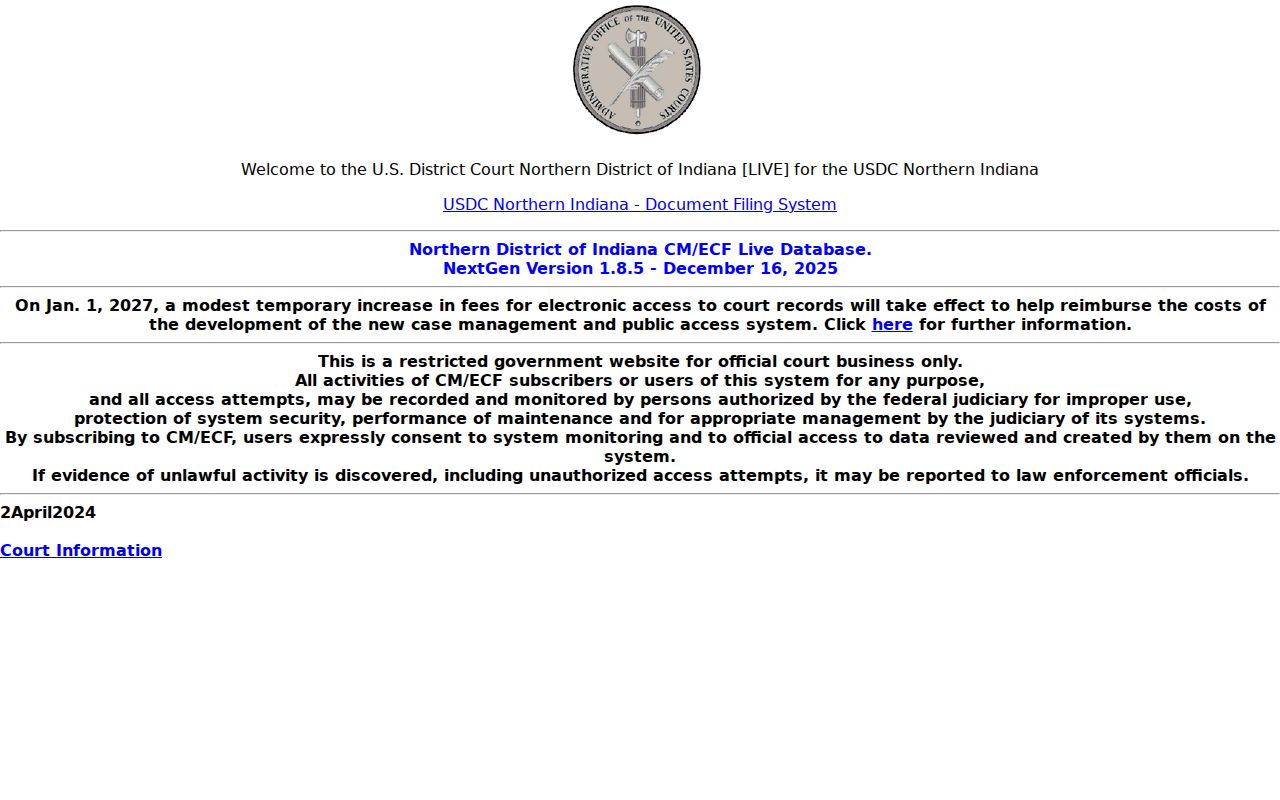
That line matters for a docket search. State cases belong to MyCase and the Huntington County Clerk; Northern District matters go through PACER or the federal clerk.
Huntington County Civil Docket Verification
A good final check compares what the docket search returned against what you truly need. Is it the CCS or a filed paper? An order, a judgment, a certified copy, or a transcript? Each item has its own custodian and access route. Write down the court identifier and entry date before calling the Clerk. That habit prevents mix-ups between similar captions and between Circuit and Superior files.
If the status reads closed, read the judgment or disposition. Do not guess why it ended. A missing case? Widen the filters. Think about converted data, a transfer, a legacy record, or a restriction. When a public document link fails, check the access matrix. Then ask about viewing the file in person. Conflicts are settled by the official file, never by a search-result summary. Send your request through one channel at a time. Duplicate submissions slow identification and create extra copy work.